
Overview
Airtable's spreadsheet-database hybrid is genuinely flexible: bases, views, and automations can be shaped into almost anything. But there's no approvals engine, no budget commitments, and no offline field capture. Those all need to be built as custom automations and maintained as your process changes.
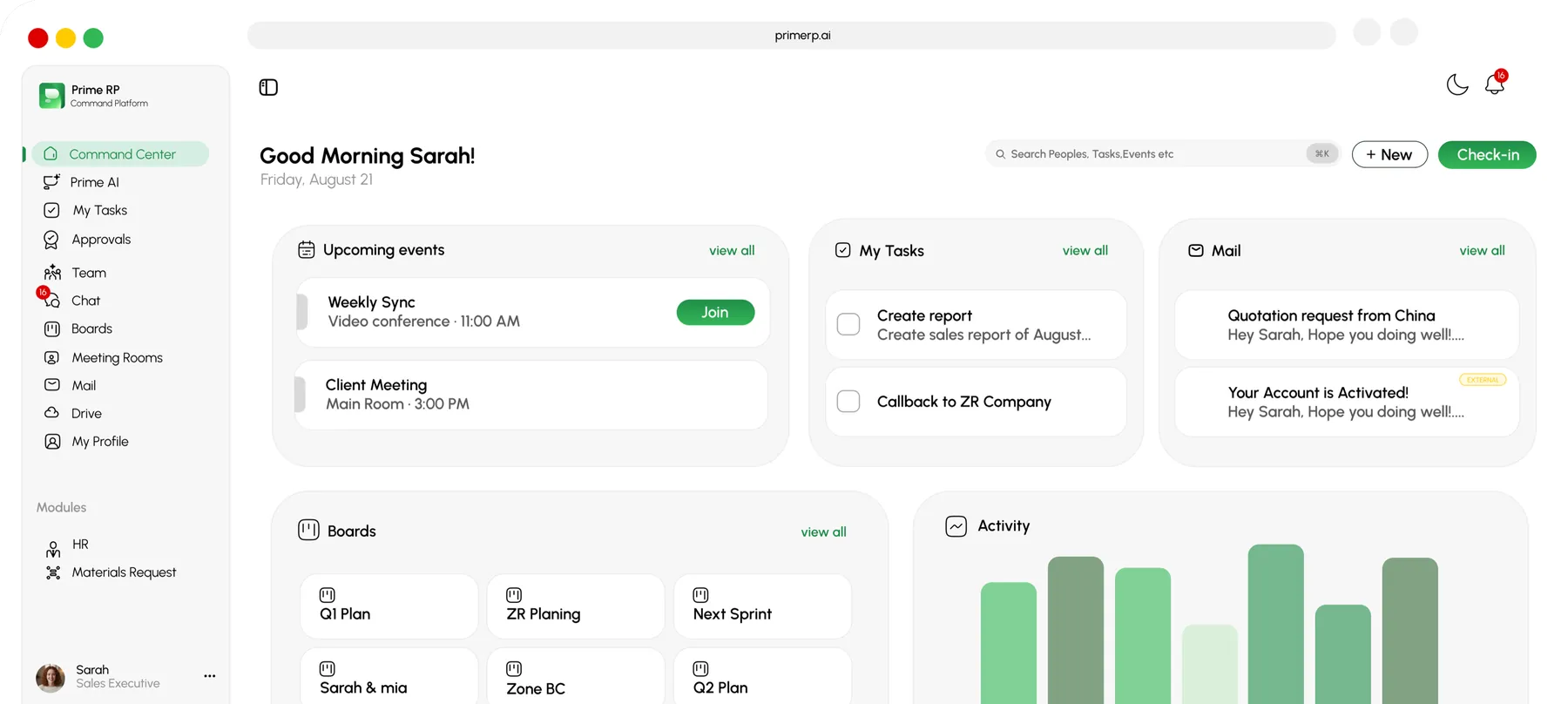
Prime RP ships those as native modules: approvals, projects, procurement, finance, and field operations already work together, with team chat and video built in rather than bolted on.
Where Prime RP wins
The gap shows up wherever a workflow needs real routing, real money, or real fieldwork attached to it.
- Multi-step approvals with SLAs and reject-to-step routing, ready to assign, not built from automation scripts.
- Field engineers capture offline photo, video, and audio reports that sync automatically, with no base to design.
- Project progress is computed from weighted, approved sub-projects, not a formula column someone has to maintain.
- Chat is tied to the record it's about, with slash actions to create tasks and approvals directly.
Where Airtable still makes sense
For teams that want to design their own data model from scratch (content calendars, lightweight CRMs, internal trackers outside core operations) Airtable's flexibility is a real strength.
Feature-by-feature
| Capability | Airtable | Prime RP |
|---|---|---|
| Multi-step approval routing | Custom automations | Native |
| Offline field reporting | No | Native |
| Weighted WBS progress | Manual formula | Built-in |
| Budget commitments tied to procurement | No | Yes |
| Chat tied to records | No | Native |
The verdict
Airtable is a great blank canvas for teams that want to build their own tools. If you'd rather have approvals, budgets, and field operations ready to use instead of built from scratch, Prime RP gets you there without the automation work.