
Overview
Odoo's model is a large catalog of individual apps (Sales, Inventory, Discuss, Project) that you install and connect as needed. It's flexible and often cheaper to start with, but the pieces stay visibly separate: different data models, different permission systems, different levels of polish.
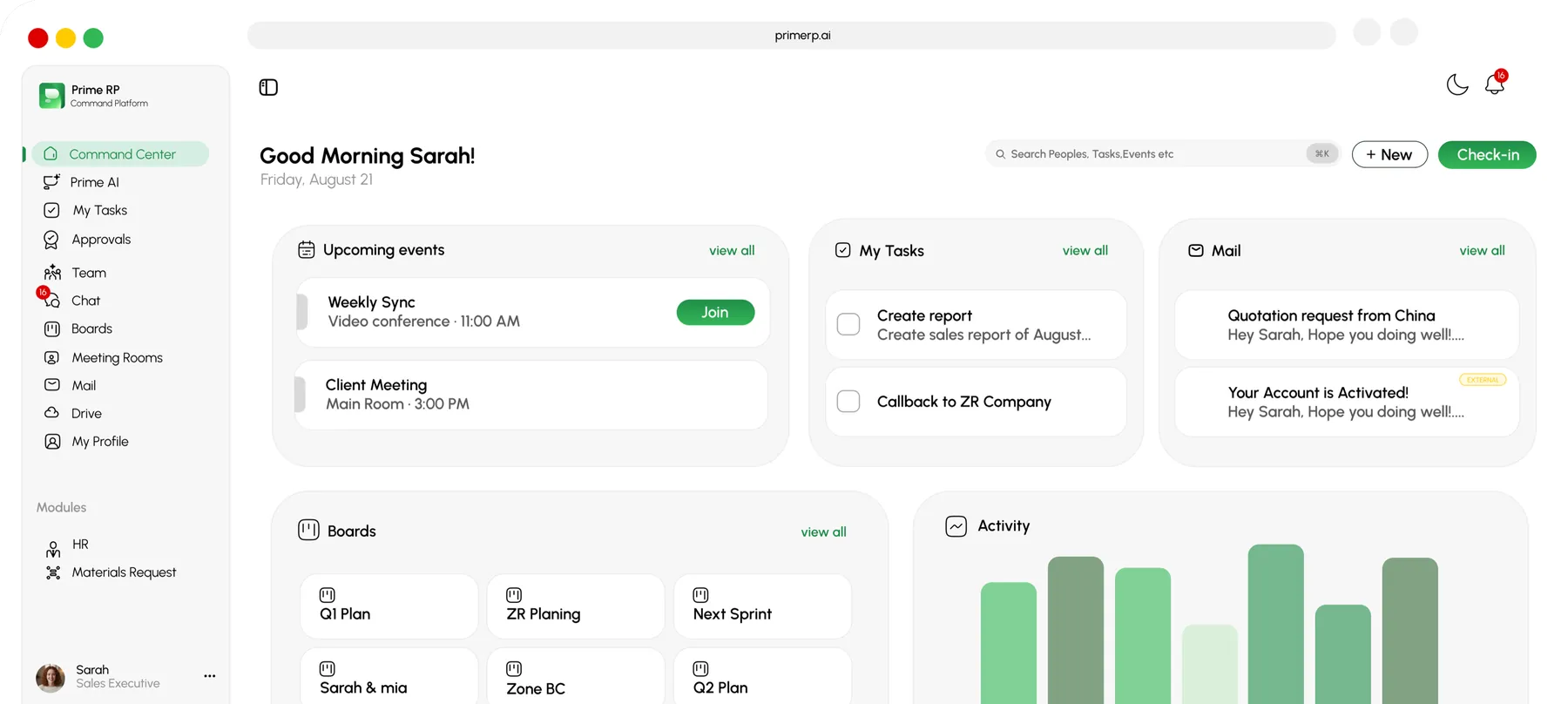
Prime RP takes the opposite approach: one platform where chat, approvals, projects, finance, procurement, HR, and field operations share the same records and the same roles from day one.
Where Prime RP wins
The difference is sharpest anywhere communication, approvals, or field work need to connect to the rest of the operation.
- Team chat and approvals are one system: a channel is linked to the project or invoice it's about, with slash actions to turn a message into a task or approval.
- Field reports are purpose-built for site work: photo, video, and audio evidence, captured offline and synced automatically, not a generic project task with an attachment.
- Approval routing is per request type: leave, procurement, and HR, each with its own approvers and SLA, rather than one generic approval flow reused everywhere.
- Weighted, sequence-aware project progress is native, built for construction-style work breakdown structures rather than generic task lists.
Where Odoo still makes sense
Odoo's marketplace genuinely wins for businesses that want a large catalog of independent apps at a low entry price: retail, e-commerce, and general small-business operations that don't need field operations or construction-style project structure.
Its open-source core and large community also make it attractive for teams that want to self-host or customize deeply at the code level.
Feature-by-feature
| Capability | Odoo | Prime RP |
|---|---|---|
| Chat tied to project/invoice records | Separate Discuss app | Native |
| Offline field reports (photo/video/audio) | No | Native |
| Per-request-type approval routing | Generic flow | Yes |
| Weighted WBS progress | No | Built-in |
| Shared roles across all modules | Per-app permissions | Unified |
Switching from Odoo
Because Odoo deployments are often partial (a few apps installed rather than the full suite) migration is usually about consolidating what's scattered: bringing projects, approvals, and field work into one system while keeping accounting sync where it already works.
Prime RP's open API and accounting integrations mean you don't have to replace everything on day one; you can connect what stays and consolidate what's fragmented.
The verdict
Odoo is a strong, affordable choice for businesses happy to assemble their own stack from independent apps. If you'd rather have projects, approvals, finance, and communication working together out of the box (especially with field teams on site) Prime RP removes the assembly work.